
Search Utah Background Check Records
A Utah background check gives you access to criminal history records held by state and local agencies. The Utah Bureau of Criminal Identification is the primary source for statewide criminal records. Court records from all 29 counties are available through the state court system. Public records laws in Utah allow individuals to request their own records and in many cases obtain records about others. This guide covers the main ways to search for and obtain a background check in Utah, including online tools, mail requests, and in-person options.
Utah Background Check Quick Facts
How to Get a Utah Background Check
The Utah Bureau of Criminal Identification handles most background check requests in the state. BCI is part of the Utah Department of Public Safety. It maintains criminal history records for offenses that occurred within Utah. You can get a copy of your own record by visiting BCI in person or by sending a mail request. Both options require a valid, government-issued photo ID. Note that Utah Driving Privilege Cards are not accepted as valid identification for this purpose.
The BCI office is located at 4315 South 2700 West, Suite 1300, Taylorsville, Utah 84129. Office hours are 8:00 a.m. to 5:00 p.m., Monday through Friday. The office is closed on weekends and Utah state holidays. If you visit in person, enter the Taylorsville State Office Building, pass the information desk, and turn left. You can reach BCI by phone at (801) 965-4445.
Mail requests are also accepted. Download the Criminal History Application from bci.utah.gov, complete it, and mail it with the required fee to Bureau of Criminal Identification, 3888 West 5400 South, Salt Lake City, Utah 84129. Mail-in requests that include the fingerprint section must have that section signed by a law enforcement officer. Payment options include cash, personal check, VISA or MasterCard, money order, or cashier's check.
The Utah Bureau of Criminal Identification website is the starting point for any background check request in the state. The image below shows the BCI homepage, which provides access to forms, fee schedules, and contact information.
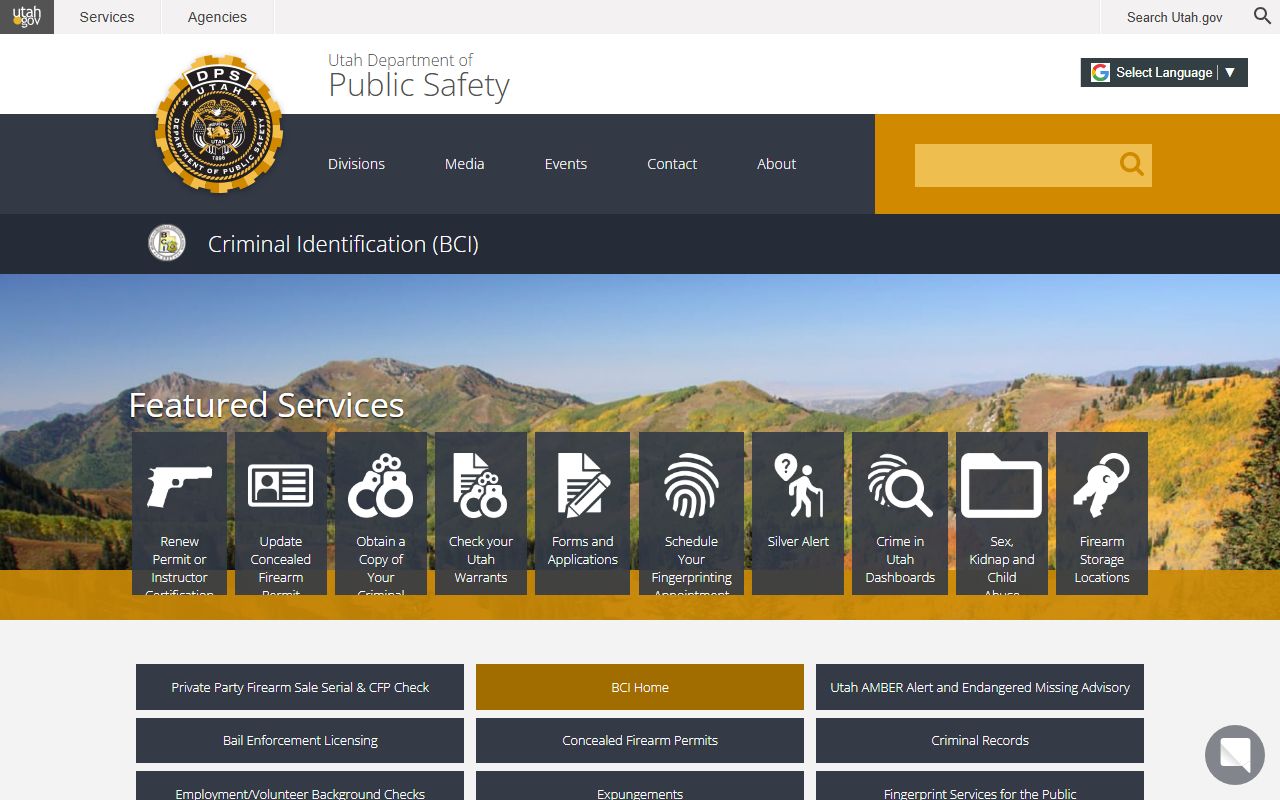
BCI is the central repository for Utah criminal history data and handles both individual requests and requests from qualifying organizations.
Note: BCI warns that scammers have been calling people using apparent state government phone numbers, claiming to be BCI officers, and demanding payment for warrants. BCI does not notify anyone of warrants by phone and will never ask for warrant payments over the phone.
Utah BCI Criminal Background Check Records
The BCI Criminal Records Section processes requests for Utah criminal history records and nationwide FBI criminal history records. It also handles expungement applications. Utah criminal history records contain information about arrests, charges, and dispositions for activity that occurred within the state. Not all charges appear in every record. For most purposes, BCI records will not include charges that were declined for prosecution, dismissed, or resulted in acquittal.
State law restricts who can access BCI records beyond an individual's own file. Utah Code Ann. § 53-10-108 defines the types of organizations -- called "qualifying entities" -- that may request criminal history information about others. These include agencies that work with the care or custody of children, those involved in fiduciary trusts, national security interests, health care for children or vulnerable adults, and care of vulnerable adults. Individuals with unauthorized access to BCI records face civil liability under this statute.
The BCI Criminal Records Section page explains what records BCI holds and how to request them. The image below shows that section of the BCI website.
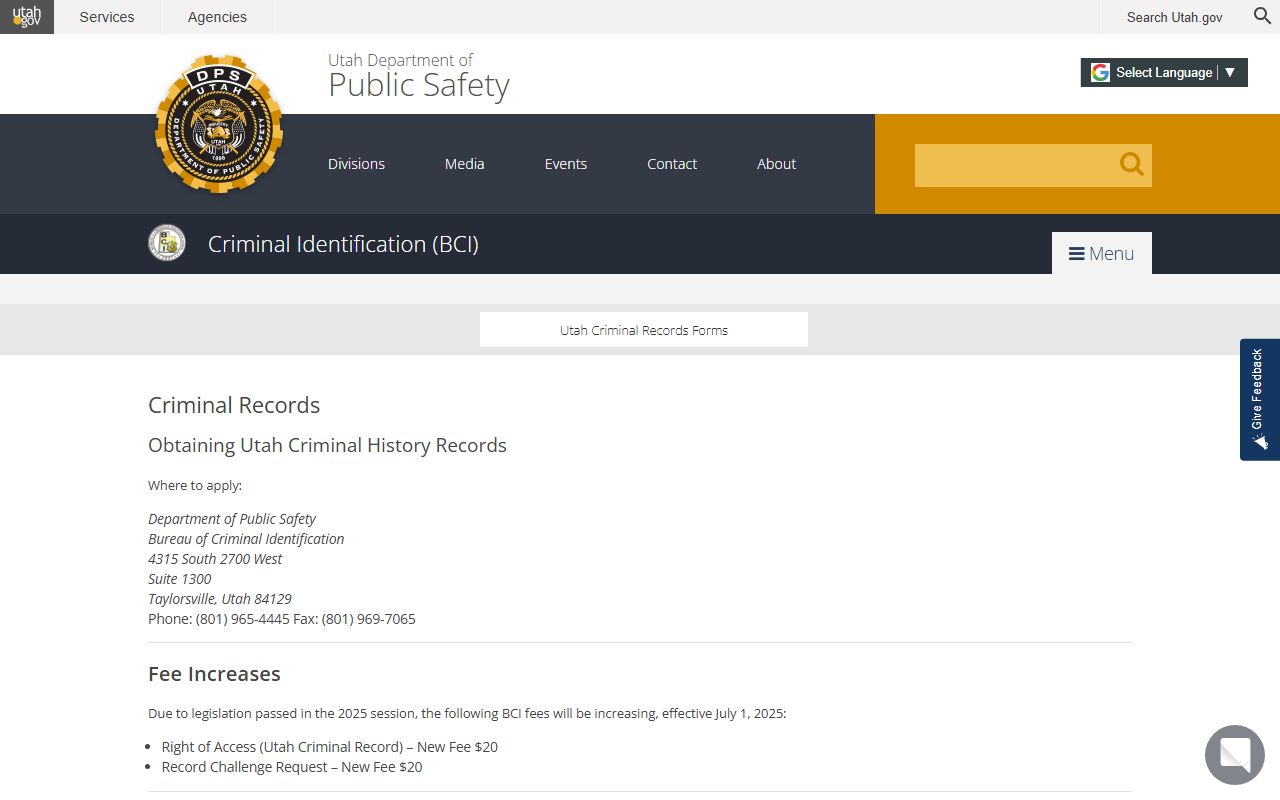
This section of the BCI website covers the Right of Access application process, mail instructions, and information about challenging incomplete or incorrect records.
Utah Court Records Background Check Search
Utah court records are another key source for criminal background searches. The Utah State Courts system includes District Courts, Justice Courts, Juvenile Courts, and Appellate Courts. District courts handle felonies, general civil claims, family law, and probate matters. Justice courts handle misdemeanors, traffic infractions, and small claims up to $20,000. In fiscal year 2024, Utah courts received roughly 257,000 district court filings and 424,000 justice court filings.
Two main tools exist for searching Utah court records online. XChange is the primary system for trial court information in Utah. It is available at utcourts.gov/en/xchange.html and allows searches by party name across district and justice courts statewide. Users can view case filings, court dates, and judgments. Access requires registration and is available by subscription or pay-per-search.
The MyCourtCase portal is a free option for viewing case history, filed documents, and scheduled hearings. It covers justice and district court cases across the state. Users can also sign up for text or email notifications when their case is updated. MyCourtCase supports electronic filing for debt collection, eviction, and small claims cases.
The image below is from the Utah State Courts homepage, which links to both XChange and MyCourtCase along with court locations and contact information.
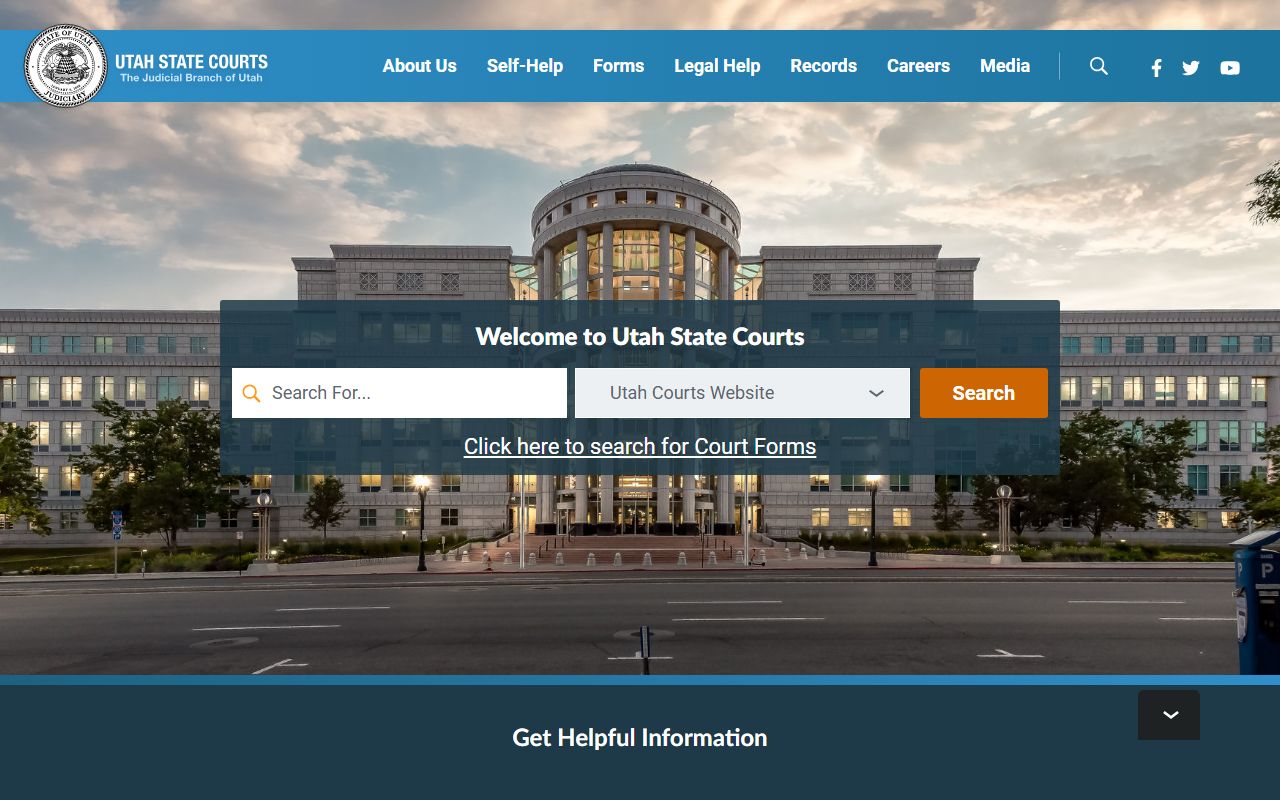
Utah courts process millions of filings each year, and public access to those records supports informed background record searches across the state.
Utah GRAMA Public Records Access
Utah's Government Records Access and Management Act, known as GRAMA, gives the public the right to inspect and receive copies of government records. The law is codified at Utah Code Title 63G, Chapter 2. GRAMA classifies records as public, private, controlled, or protected. Public records are open to any person. Private, controlled, and protected records have restrictions that may limit access.
Under GRAMA, government entities have 10 business days to provide a requested record, deny the request, or inform the requester of extraordinary circumstances that require more time. If a request is denied, the requester can appeal the decision. The appeals process is outlined in sections 63G-2-401 through 63G-2-406 of the Utah Code. GRAMA requests must include the requester's contact information and a specific description of the records sought.
The state operates an online portal for submitting GRAMA requests to state agencies. The Utah Open Records Portal at openrecords.utah.gov makes it easy to direct a request to the right agency and track its progress.
The image below shows the Utah Open Records Portal, the official online tool for submitting public records requests to state agencies.
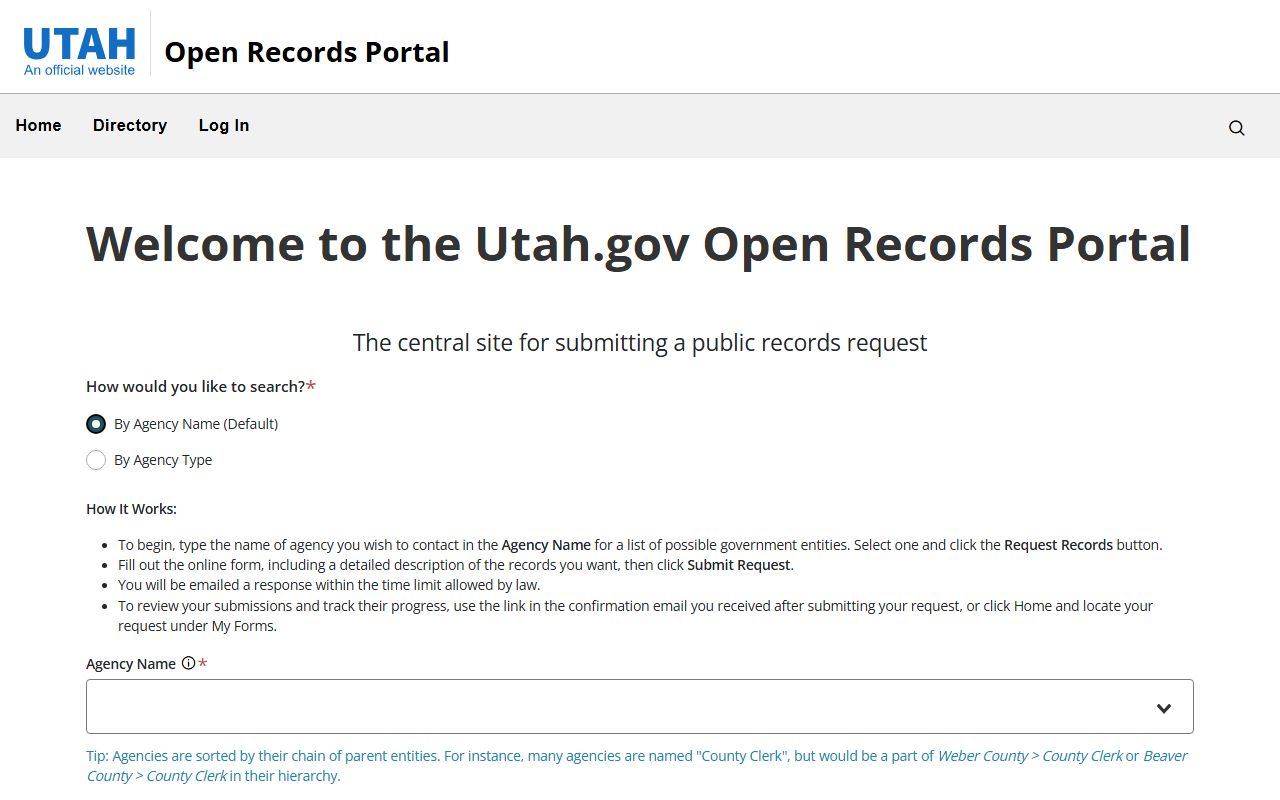
Using this portal can speed up the process of obtaining public records by routing your request directly to the agency that holds them.
Note: GRAMA requests are a useful route for records held by government agencies that are not covered by the BCI or court records systems.
Utah Background Check Fees and Costs
BCI charges fees for most background check services. Effective July 1, 2025, the standard fee for a Utah criminal record Right of Access request is $20. The same $20 fee applies to name and date-of-birth background checks, Western Identification Network fingerprint background checks, and fingerprinting services. A Record Challenge Request also costs $20. Before July 1, 2025, the Right of Access fee was $15.
Court record fees are set by Utah Code 78A-2-408. Paper copies cost $0.25 per sheet. Electronic audio or video records cost $15 per half day. Fax or email copies cost $5 for the first 10 pages, then $0.50 for each additional page. The first 15 minutes of staff time are free; after that, the rate is $15 per hour. These fees apply to copies requested from court clerks across the state.
The image below links to the GRAMA statutes, which set the rules for how fees are determined and when waivers may apply for public records requests.
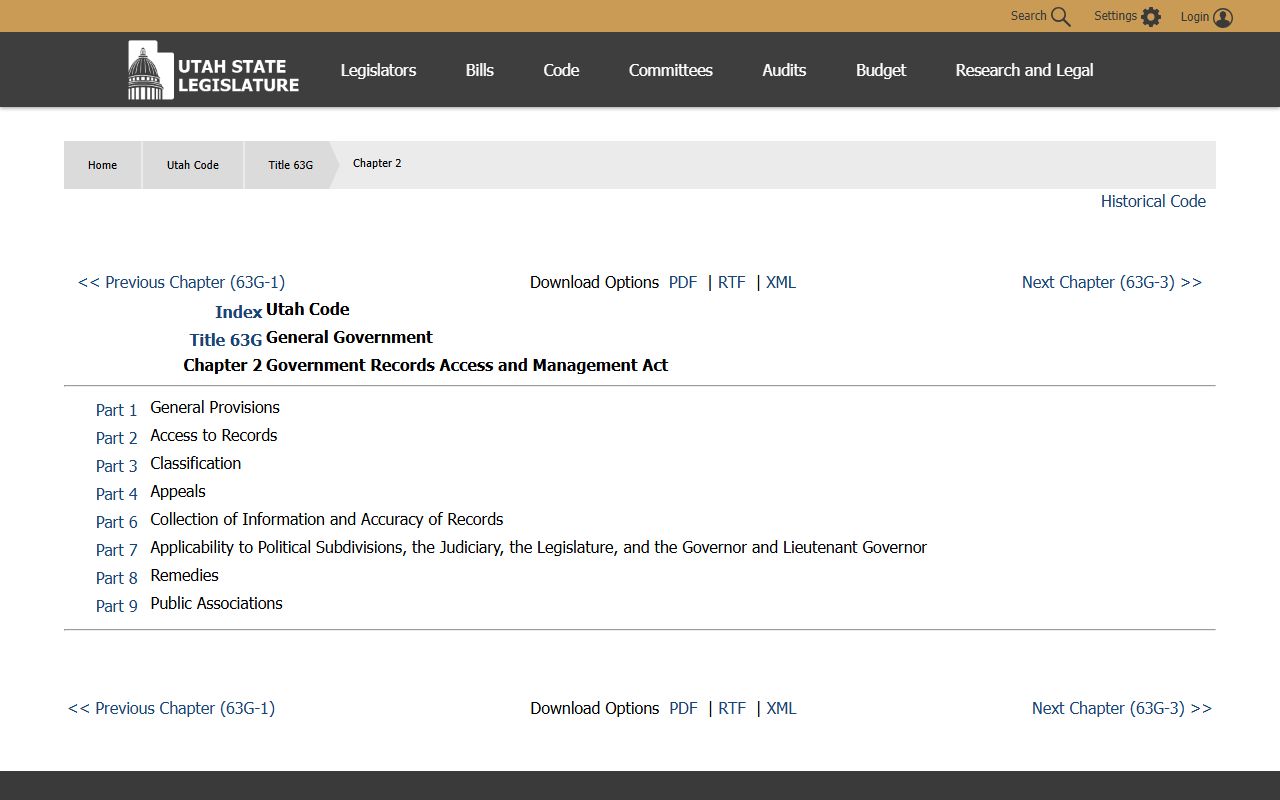
GRAMA allows agencies to charge reasonable fees for compiling and copying records, but it also provides a process to request fee waivers in certain cases.
Challenge a Utah Criminal Background Check Record
If you believe your Utah criminal history record contains errors or incomplete information, you have the right to challenge it. BCI maintains criminal history information and allows individuals to request corrections. The process starts by submitting a Record Challenge Request to BCI along with the $20 fee. You will also need to provide documentation that supports your claim that the record is wrong or missing information.
BCI is required under Utah law to maintain accurate records. If a charge was declined for prosecution, dismissed, or resulted in an acquittal, it generally should not appear in most background check results. If you find such a charge on your record, the challenge process is the appropriate way to seek its removal or correction. BCI staff will review the submitted materials and compare them against court and law enforcement records.
The image below is from the Utah background check statute page, which outlines the rules governing how criminal history records are used and what protections exist for the individuals named in those records.
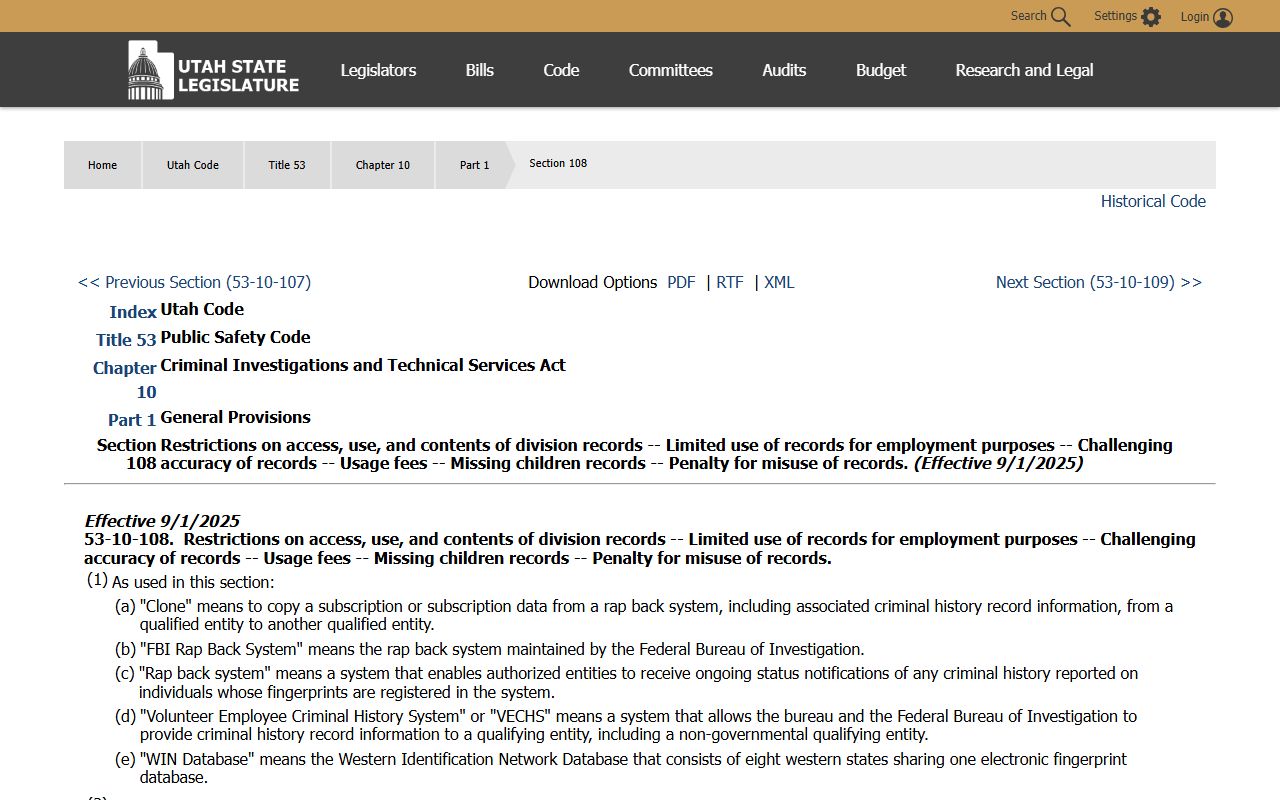
Understanding this statute helps individuals know what information is permitted to appear in a background check result and what steps can be taken if that information is inaccurate.
Note: You can reach BCI at (801) 965-4445 or by mail at 4315 South 2700 West Suite 1300, Taylorsville, Utah 84129 to ask questions about the challenge process before submitting a request.
Utah Expungement and Background Check Records
Expungement allows a person to seal or restrict access to a criminal record in Utah. The process is governed by Utah Code § 77-40a. Once a record is expunged, only seven specified agencies can view it: the Board of Pardons and Parole, Peace Officer Standards and Training, federal authorities, the Department of Commerce, the Department of Insurance, the State Board of Education, and the Commission on Criminal and Juvenile Justice. An individual with an expunged record may legally deny that the record ever existed under section 77-40a-401.
Waiting periods apply before a conviction can be expunged. Under section 77-40a-303, the required time from sentence completion is: 10 years for DUI convictions; 7 years for felonies; 5 years for Class A misdemeanors; 4 years for Class B misdemeanors; and 3 years for Class C misdemeanors and infractions. For arrests that did not result in a conviction, a petition may be filed 30 or more days after the arrest if there are no pending proceedings and the case was dismissed with prejudice, charges were not filed, the statute of limitations expired, or the person was acquitted.
The Clean Slate law provides automatic expungement for certain qualifying cases after May 1, 2020. Eligible offenses include Class A misdemeanor possession of a controlled substance, any Class B or C misdemeanor, and any infraction -- provided conviction limits have not been exceeded and the required time periods have passed. Clean Slate removes these records without requiring the individual to file a petition.
The standard expungement process requires several steps. First, get fingerprints taken at a law enforcement agency. Next, submit an Application of Eligibility to BCI along with $65 per offense type. BCI processes 300 to 400 applications each month and typically takes four to six months to respond. If BCI issues a Certificate of Eligibility, it is valid for 90 days. Within that window, file a Petition to Expunge with the court that decided the case. The court filing fee is approximately $135 plus $6 for certified copies. The prosecutor has 35 days to review the petition. If the judge signs the order, the petitioner must distribute copies to BCI, the arresting agency, the prosecuting agency, and the booking agency.
The image below links to the Utah Expungement Act at le.utah.gov, where you can read the full text of the law governing sealing of criminal records.
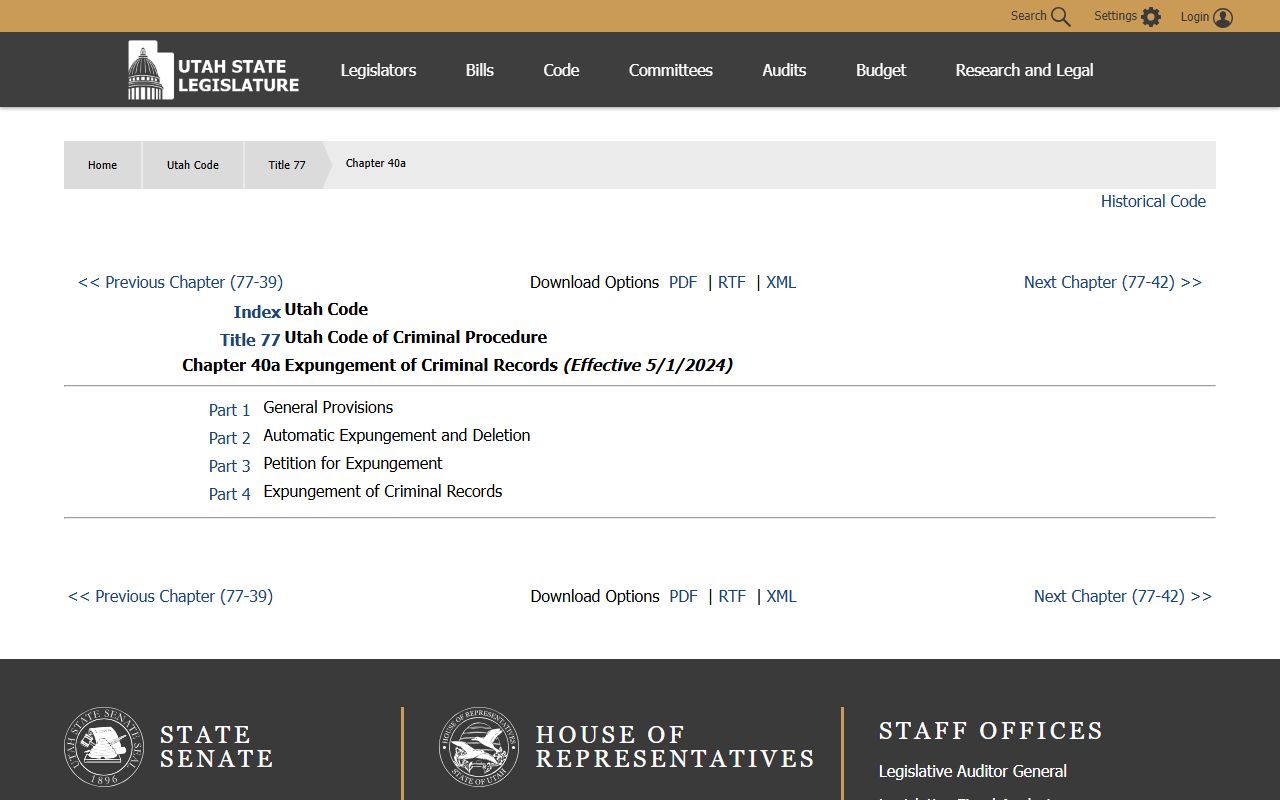
The expungement act is a key law for anyone whose background check results reflect old or minor offenses that may qualify for sealing under current Utah law.
Utah BCI Fingerprinting Services
BCI offers fingerprinting services for non-criminal purposes. These services are available by appointment only. The fee is $20 per fingerprinting session, effective July 1, 2025. Common uses include identity verification, professional licensing, and background checks that require fingerprint-based searches. To schedule an appointment, contact BCI at (801) 965-4445 during regular business hours.
Fingerprint-based background checks can be processed through the Western Identification Network, a multi-state system that compares prints against a broader database than name-based searches alone. This type of check is more thorough and is often required by organizations that need a higher level of verification. The $20 fee for a Western Identification Network fingerprint background check covers the state processing portion of the request.
Mail-in applications that include the fingerprint section require a law enforcement officer's signature on that section. If you are completing a mail request and need fingerprints taken, contact your local law enforcement agency to arrange that step before mailing your application to BCI.
Utah Warrant and Criminal Record Searches
Utah does not maintain a single statewide public warrant search tool. Warrants are issued by individual courts and tracked by law enforcement agencies at the county and municipal level. To check for active warrants in a specific area, contact the relevant county sheriff's office or city police department. Some counties and cities post limited warrant information on their public websites.
Court records from the XChange system and MyCourtCase portal may reflect case statuses that indicate a warrant was issued. These systems do not show real-time warrant status, but they can show whether a case has an outstanding issue. For current warrant information, direct contact with the issuing court or local law enforcement is the most reliable approach.
The Utah State Archives at archive.utah.gov holds historical government records including criminal records going back many decades. The Archives preserves divorce decrees, naturalization papers, and other records that may appear in a thorough background record search. Research services are available for those who cannot visit in person.
Note: BCI will never call to inform someone of a warrant or ask for payment by phone. Calls claiming to be from BCI with urgent demands are a known scam targeting Utah residents.
Utah Background Check Records by County
Each of Utah's 29 counties maintains its own court and public records. Select a county below to find background check and criminal history record resources specific to that area.
Utah Background Check Records by City
Looking for background check records in a specific Utah city? Select a city below to find local court locations, justice courts, and public records offices that serve that community.