
Rich County Criminal Background Check Guide
Rich County sits in the far northeastern corner of Utah near the Bear Lake area and the Idaho border, with roughly 2,500 residents and the county seat in Randolph. Conducting a background check in Rich County involves the Rich County Sheriff's Office, the First District Court, and the Utah Bureau of Criminal Identification. This guide walks through each record source, how to file a GRAMA request with Rich County agencies, and what to expect from the BCI statewide criminal history process.
Rich County Quick Facts
Rich County Sheriff and Local Records
Sheriff Dale Stacey leads the Rich County Sheriff's Office in Randolph. The Sheriff's Office is the primary law enforcement agency for Rich County and holds arrest records, booking data, incident reports, and warrant information for all cases worked by county deputies. Rich County is one of the smallest counties in Utah by population, and the Sheriff's Office is the main local source for criminal records.
To request records from the Rich County Sheriff, visit the office in Randolph during regular business hours or inquire about submitting a written request by mail. Bring a valid photo ID. Include the subject's full name, date of birth, any known incident dates, and case numbers if available. Under Utah law, the office must respond to your GRAMA request within ten business days.
Because Rich County borders Idaho, some incidents involving residents may cross jurisdictional lines. If a person has contacts with agencies in neighboring Idaho counties or Utah counties like Cache or Weber, separate records requests to those jurisdictions may be needed for a truly complete criminal background check.
How to Run a Background Check in Rich County
A thorough Rich County background check combines three sources: the Sheriff's arrest records, the First District Court case files, and the BCI statewide criminal history database. Each source holds a different piece of the record.
The Utah Bureau of Criminal Identification is the most comprehensive source for statewide criminal history. BCI maintains a fingerprint-based database covering all Utah counties, including Rich. Under the Right of Access provision, any individual may request their own criminal history for $20.00 (effective July 2025). Submit requests to BCI's Criminal Records Section at 3888 West 5400 South, Salt Lake City, UT 84129. In-person visits go to 4315 South 2700 West, Suite 1300, Taylorsville, UT 84129. Phone: (801) 965-4445. Hours: Monday through Friday, 8:00 a.m. to 5:00 p.m. BCI accepts cash, check, Visa, Mastercard, and money orders.
For Rich County residents, mailing the BCI request is the most practical option. Randolph is a remote community, and the drive to Taylorsville is considerable. Mail submissions produce the same result as in-person visits, though they may take slightly longer to process.
The Utah Bureau of Criminal Identification maintains statewide criminal history records covering Rich County and all other Utah counties.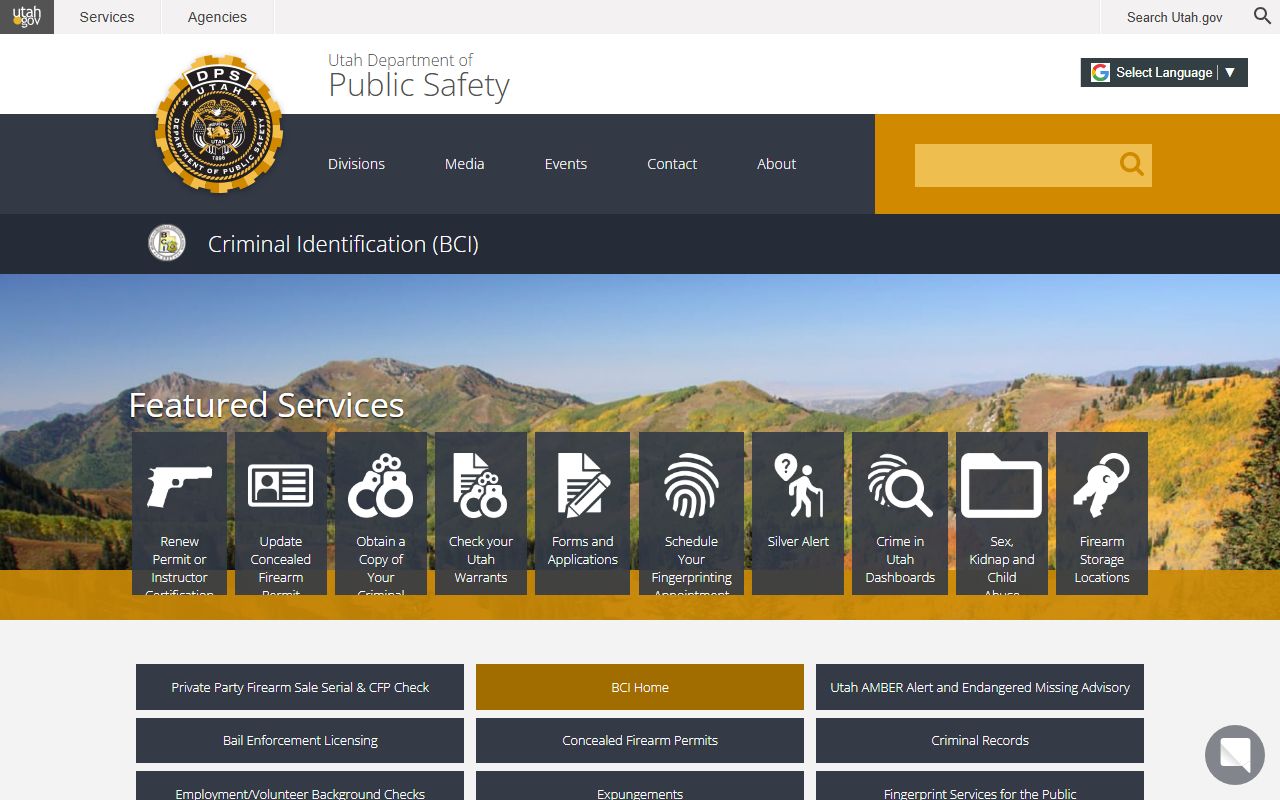
BCI is the central state repository for criminal history and processes Right of Access requests from Utah residents including those in Rich County.
Note: Third-party access to BCI criminal records follows separate authorization rules under Utah Code Section 53-10-108; individuals may request only their own record through the Right of Access process.
First District Court Records for Rich County
The First District Court serves Rich County and handles criminal filings, civil cases, and family law matters for the region. Court records are public under Utah law and include filings, charges, pleas, verdicts, sentencing documents, and any probation or supervision conditions. These records document the formal legal outcome of criminal proceedings in Rich County.
Two online tools give access to Utah court records. MyCourtCase is free and open to anyone. No account or registration is needed. Search by name or case number to see basic case information across all Utah district courts. For document images and detailed filings, XChange is the Utah Courts subscription service that provides deeper access for a per-search fee. The First District Court serves both Cache County and Rich County, with the primary courthouse in Logan.
A court record is different from an arrest record. A person may have an arrest on file with the Sheriff but no court case if charges were never filed. Checking both systems provides the most complete picture of a person's criminal history in Rich County.
Inmate and Booking Searches in Rich County
The Rich County jail is operated by the Sheriff's Office in Randolph. Booking records are public. Contact the Sheriff's Office during business hours to ask about current inmates or recent bookings. Due to Rich County's small population, the local jail handles a relatively low number of bookings compared to larger counties.
For individuals transferred to state prison or under active Utah Department of Corrections supervision, the Department's Offender Search tool covers those populations. Vinelink provides a free public search for inmates and former inmates across many Utah county and state facilities. Search by name or offender ID. Vinelink is updated regularly and supports notifications for custody changes including releases and transfers.
Warrant Checks in Rich County
Warrants in Rich County are issued by First District Court judges and entered into the BCI Statewide Warrants file, the SWW. The SWW consolidates active warrants from agencies across all Utah counties. Public warrant inquiries can be directed to the Rich County Sheriff's Office during regular business hours. The First District Court clerk in Logan can also confirm whether a warrant has been issued in connection with a specific open case.
Bench warrants arise when someone misses a scheduled court hearing. Arrest warrants arise when a judge approves a law enforcement probable cause request. Both types are entered into the SWW after the issuing agency processes the paperwork. A short lag between issuance and database entry is possible for newly issued warrants.
Note: The SWW reflects only warrants that have been formally entered; a warrant issued very recently may not yet appear in the statewide database.
GRAMA Public Records Requests in Rich County
Utah's Government Records Access and Management Act, at Utah Code Title 63G, Chapter 2, gives any person the right to request public records from Rich County government agencies. The Sheriff's Office, county clerk, and other local offices are all covered. Each must respond to a written GRAMA request within ten business days by providing the record, issuing a written denial, or notifying the requester of a delay.
To submit a GRAMA request, contact the records officer at the specific Rich County agency holding the record you want. Identify the document precisely. Include names, dates, incident locations, and case numbers. The more specific your request, the faster it is likely to be processed. Copy fees for paper records follow the standard state schedule.
The Utah GRAMA Portal at openrecords.utah.gov supports online submissions to participating agencies. Verify whether the specific Rich County office you are targeting uses the portal before submitting electronically. For agencies that do not participate, submit your written request by mail or in person.
Utah's GRAMA statute governs public records access for Rich County agencies and all other state and local government bodies in Utah.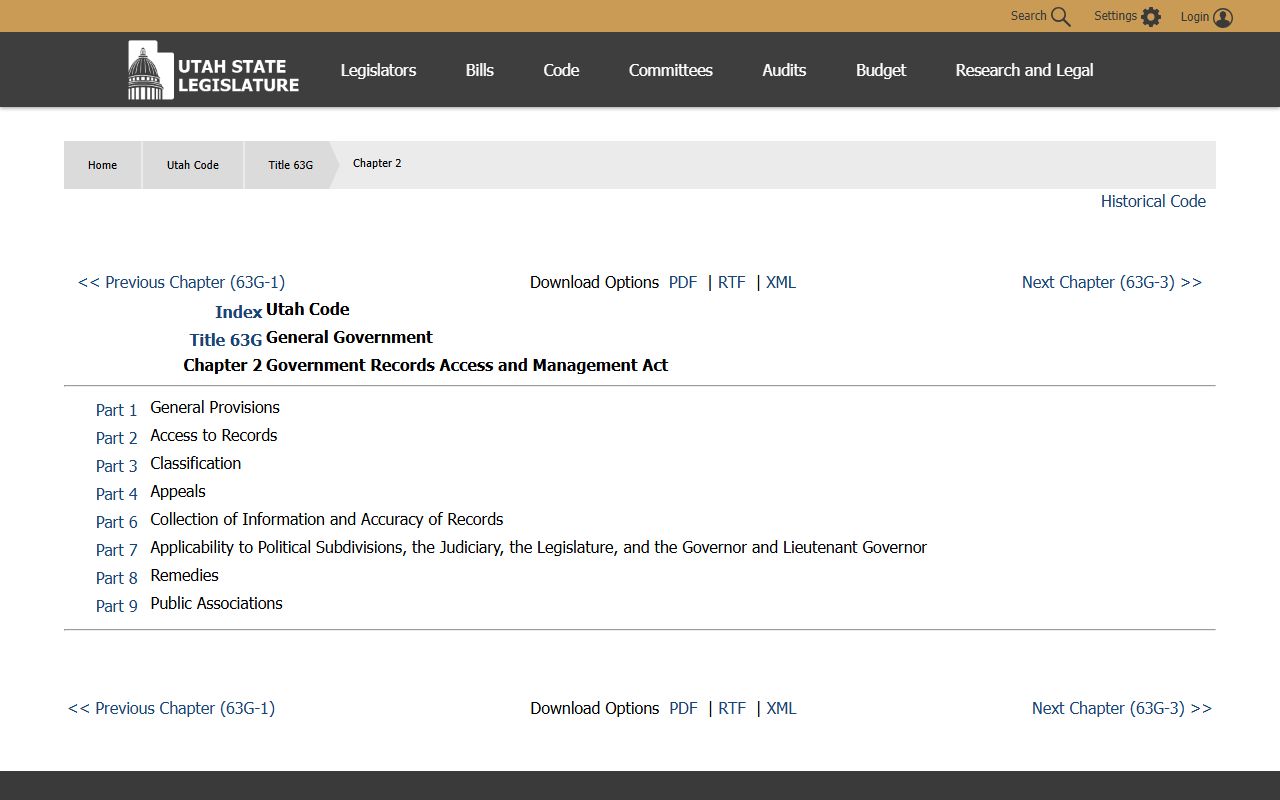
GRAMA provides a clear legal framework for requesting criminal records, incident reports, and other government documents from Rich County agencies.
Expungement of Rich County Criminal Records
Utah's expungement statute at Utah Code Title 77, Chapter 40a allows qualifying individuals to seal criminal records after a waiting period based on offense severity. Waiting periods are: ten years for DUI, seven years for felonies, five years for Class A misdemeanors, four years for Class B misdemeanors, and three years for Class C misdemeanors and infractions. The waiting period runs from conviction or release from supervision, whichever is later.
Begin the process by applying for a Certificate of Eligibility from BCI's expungement unit. The fee is $65.00 per offense. Processing typically takes four to six months. The Certificate is valid for 90 days. Once you have it, file a petition with the court that handled the original case. Rich County criminal cases go through the First District Court in Logan. The court reviews the petition, may hold a hearing, and issues a final order if the petition is approved.
Utah's Auto Clean Slate program may automatically seal some qualifying records from cases resolved after May 1, 2020. BCI handles the review for these cases. Not all offenses qualify. Consulting a licensed Utah attorney can help you understand which records in your history may be eligible and what steps to take.